
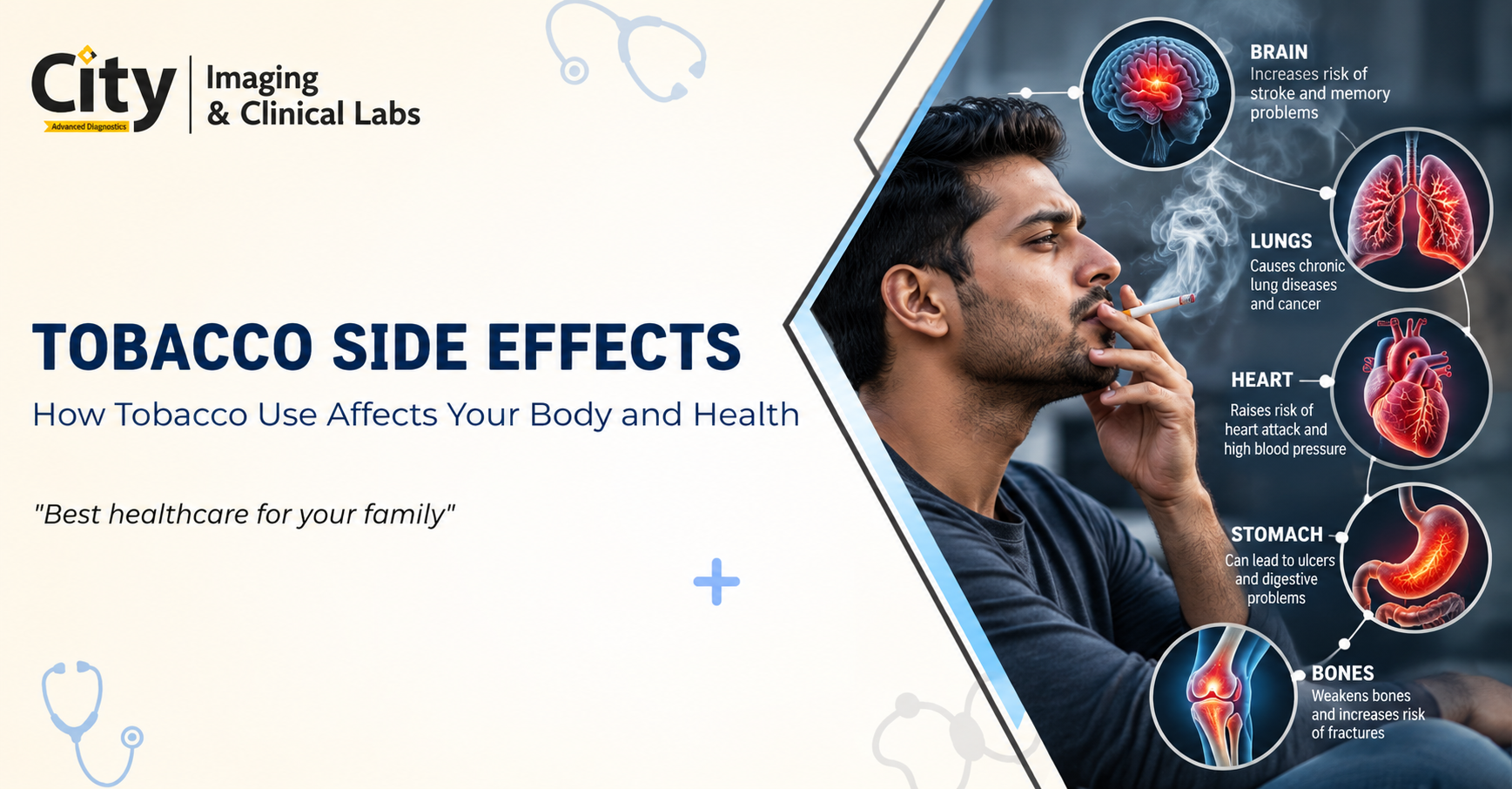
Tobacco Side Effects: How Tobacco Use Affects Your Body and Health

- Key Takeaways
- What Is Tobacco and Why Is It Harmful?
- Major Tobacco Side Effects on the Human Body
- Symptoms That May Indicate Tobacco-Related Health Problems
- Which Tests Help Identify Tobacco-Related Health Problems?
- Steps to Reduce Health Risks and Prevent Disease
- When Should You See a Doctor?
- Frequently Asked Questions (FAQs)
- Related Articles
Tobacco use can damage almost every organ in the body, significantly increasing the risk of respiratory diseases, heart disease, stroke, oral health issues, and several types of cancer. Whether tobacco is smoked (cigarettes, cigars, bidis, or hookah) or consumed in smokeless forms (gutkha, khaini, zarda, or chewing tobacco), regular exposure to its harmful chemicals carries serious long-term health consequences.
Tobacco-related health problems often develop gradually, and many individuals do not experience noticeable symptoms until a disease has progressed. Recognizing early warning signs, understanding the side effects, and undergoing appropriate diagnostic tests can help identify health issues early and support timely treatment.
Key Takeaways
- There is no risk-free form of tobacco, whether smoked or smokeless.
- Tobacco harms the lungs, heart, mouth and raises the risk of many cancers.
- Early disease often has no symptoms, so screening matters for long-term users.
- Quitting brings health benefits within minutes, and risk keeps falling over the years.
What Is Tobacco and Why Is It Harmful?
Tobacco is a plant whose leaves naturally contain nicotine, a highly addictive chemical that makes quitting difficult. Beyond nicotine, tobacco products expose users to thousands of toxic chemicals depending on how they are processed and consumed.
- Tobacco Smoke: Contains over 7,000 chemicals, including dozens of known carcinogens (cancer-causing substances). Carbon monoxide in smoke impairs the blood's capacity to transport oxygen, while irritating compounds damage airways and lung tissues.
- Smokeless Tobacco: Smokeless tobacco is not a safe alternative to smoking. Products such as gutkha, khaini, zarda, and chewing tobacco cause severe damage to gums and oral tissues and drastically increase the risk of oral cancer. Many smokeless products also contain areca nut, which carries additional carcinogenic risks.
Key Takeaway: There is no risk-free form of tobacco use. The product type, usage frequency, exposure duration, and individual health factors all dictate the risk of developing severe diseases.
Major Tobacco Side Effects on the Human Body
1. Respiratory System and Lung Damage
The lungs are directly exposed to the harmful agents in tobacco smoke. Smoke paralyzes and destroys the tiny hair-like structures (cilia) that clean the airways, leading to mucus buildup and chronic inflammation.
Long-term tobacco smoking contributes to several serious conditions:
- Chronic Bronchitis: Persistent airway inflammation resulting in ongoing coughing and mucus production.
- Emphysema: Destruction of the air sacs (alveoli) in the lungs, causing severe breathlessness.
- Chronic Obstructive Pulmonary Disease (COPD): A progressive lung disease encompassing chronic bronchitis and emphysema that causes airflow limitation and reduced exercise tolerance.
- Lung Cancer: Carcinogens in smoke mutate lung cells, making smoking the leading cause of lung cancer worldwide.
2. Cardiovascular Risks: Heart Disease and Stroke
Tobacco damages the cardiovascular system by promoting atherosclerosis (fatty plaque buildup in artery walls), accelerating inflammation, and damaging blood vessel linings.
- Nicotine temporarily spikes heart rate and blood pressure.
- Carbon monoxide reduces oxygen delivery throughout the body.
Potential Cardiovascular Complications:
- Coronary artery disease and heart attacks
- Peripheral artery disease (reduced blood flow to limbs)
- Stroke caused by blocked or burst blood vessels in the brain
- Uncontrolled high blood pressure
3. Oral Health Problems and Oral Cancer
Both smoking and smokeless tobacco cause severe damage inside the mouth:
- Receding gums, gum disease (periodontitis), and tooth loss
- Persistent bad breath (halitosis) and heavy tooth staining
- Delayed healing following dental procedures or extractions
- Oral Leukoplakia / Erythroplakia: White or red patches inside the mouth that may become cancerous
- Oral Cancer: Malignancies affecting the tongue, gums, cheeks, roof or floor of the mouth, and throat
4. Increased Risk of Multiple Cancers
Tobacco exposure is the single largest preventable cause of cancer worldwide. Beyond lung and oral cancers, it is directly linked to cancers of the:
- Throat, larynx, and esophagus
- Bladder and kidneys
- Pancreas and stomach
- Cervix and blood (acute myeloid leukemia)
5. Weakened Immune System and Slow Healing
Tobacco smoke suppresses immune responses and damages mucosal membranes, leaving the body vulnerable to respiratory infections like pneumonia and tuberculosis. Smokers also experience slower wound healing after surgery or physical injuries.
6. Reproductive Health and Fertility Impact
- In Men: Smoking is associated with reduced sperm count, poorer sperm motility, and erectile dysfunction.
- In Women: Tobacco use impairs fertility and increases risks during pregnancy, including premature delivery, low birth weight, placental abruption, and sudden infant death syndrome (SIDS).
7. Physical Appearance and Overall Vitality
- Skin and Ageing: Reduced micro-circulation accelerates wrinkle formation and premature skin ageing.
- Stamina: Impaired lung and heart function causes reduced exercise tolerance, early fatigue, and persistent low energy. Read more about what fatigue means and when tiredness is not normal.
Symptoms That May Indicate Tobacco-Related Health Problems
Because early-stage diseases often present no symptoms, it is vital to pay attention to persistent body changes:
- Persistent cough or excessive mucus/phlegm
- Shortness of breath, wheezing, or chest tightness
- Coughing up blood (hemoptysis)
- Mouth ulcers or sores that do not heal within 2 weeks
- Persistent white or red patches inside the mouth
- Unexplained weight loss or loss of appetite
- Difficulty swallowing or a feeling of a lump in the neck
- Frequent, recurring chest infections
Which Tests Help Identify Tobacco-Related Health Problems?
There is no single "tobacco test" that checks for every issue. Diagnostic evaluations depend on age, exposure history, specific symptoms, and physical exam findings.
1. Clinical Examination and Medical History
A physician will review your history (years of tobacco use, frequency, and type) and perform a targeted physical examination, including listening to lung sounds, checking heart rhythm, and examining the oral cavity and lymph nodes.
2. Pulmonary Function Test (PFT) / Spirometry
- Purpose: Measures how much air your lungs can hold and how quickly you can exhale.
- When used: Recommended for individuals experiencing persistent cough, wheezing, or breathlessness to diagnose or monitor COPD and airflow obstruction.
Book the PFT (Spirometry) test at City Imaging.
3. Chest X-Ray
- Purpose: Provides a basic image of the heart, lungs, and chest wall.
- When used: Helps detect pneumonia, major lung masses, or fluid accumulation.
- Important Note: A normal chest X-ray does not rule out early-stage lung cancer.
See the X-Ray Chest PA test.
4. Low-Dose CT Scan (LDCT)
- Purpose: Uses low-dose radiation to create detailed cross-sectional images of the lungs.
- When used: Recommended as a primary lung cancer screening tool for eligible high-risk individuals (e.g., older adults with a heavy, long-term smoking history), even before symptoms appear.
Learn about the NCCT Chest Screening (Low Dose) scan and read our guide on CT chest plain: purpose, procedure and risks.
5. Oral Examination and Biopsy
- Purpose: Evaluates suspicious patches, non-healing ulcers, or growths in the mouth.
- When used: A doctor or dentist conducts a visual inspection; if an abnormal area is found, a biopsy (tissue sample) is taken to test for cancerous or precancerous cells.
6. Cardiac Tests (ECG, Lipid Profile)
- Electrocardiogram (ECG): Checks the heart's electrical activity if you experience chest pain, palpitations, or dizziness. See the ECG test.
- Lipid Profile & Blood Glucose: Measures cholesterol, triglycerides, and blood sugar levels to evaluate overall cardiovascular risk. See the Lipid Profile test and our guide to the HbA1c blood test.
7. Complete Blood Count (CBC)
- Purpose: Evaluates red and white blood cells.
- When used: Helps investigate unexplained fatigue, persistent infections, or suspected anemia. See the Complete Blood Count (CBC) test.
Diagnostic Test Overview
| Health Concern / Symptom | Potential Diagnostic Test |
|---|---|
| Persistent cough or breathlessness | Spirometry / Pulmonary Function Test |
| Suspected chest infection or mass | Chest X-Ray |
| Asymptomatic lung cancer screening (High-Risk) | Low-Dose CT (LDCT) Scan |
| Mouth ulcers, non-healing sores, patches | Oral Exam & Biopsy (if indicated) |
| Chest discomfort or heart palpitations | ECG & Cardiac Evaluation |
| Cardiovascular & metabolic risk check | Lipid Profile & HbA1c / Fasting Glucose |
| Unexplained weakness or fatigue | Complete Blood Count (CBC) |
Steps to Reduce Health Risks and Prevent Disease
- Quit All Tobacco Products: The most effective step you can take. Avoid substituting cigarettes with smokeless tobacco or e-cigarettes/vapes.
- Seek Professional Cessation Support: Utilize behavioral counseling, support groups, and FDA-approved cessation aids (such as Nicotine Replacement Therapy, varenicline, or bupropion) under medical guidance.
- Eliminate Secondhand Smoke: Keep homes and vehicles 100% smoke-free to protect family members from passive exposure.
- Attend Routine Screenings: Stay up-to-date with dental check-ups and medical health evaluations.
- Adopt a Healthy Lifestyle: Regular exercise and a balanced diet help support heart and lung recovery, though they do not replace the necessity of quitting.
When Should You See a Doctor?
Schedule a Medical Consultation If You Have:
- A persistent cough lasting more than 3 weeks
- Non-healing mouth ulcers or red/white patches lasting over 2 weeks
- Unexplained weight loss or loss of appetite
- Ongoing fatigue or reduced exercise capacity
Seek Emergency Medical Care Immediately If You Experience:
- Severe, sudden shortness of breath
- Chest pain radiating to the arm, jaw, or back
- Coughing up significant amounts of blood
- Sudden weakness or numbness on one side of the body, slurred speech, or sudden vision loss (signs of stroke)
Frequently Asked Questions (FAQs)
1. Is smokeless tobacco (gutkha, khaini) safer than smoking?
No. Smokeless tobacco carries high risks of oral cancer, gum disease, nicotine addiction, and cardiovascular problems. It is not a safe alternative to smoking.
2. Can a standard blood test detect tobacco damage or lung cancer?
No. Blood tests help evaluate general health (like anemia, blood sugar, or cholesterol levels), but they cannot detect early lung cancer or directly measure lung damage.
3. Does a normal chest X-ray mean my lungs are completely healthy?
No. Chest X-rays can miss small tumors or early stages of COPD. A Low-Dose CT (LDCT) scan is much more sensitive for detecting early lung cancer in high-risk individuals.
4. How soon does the body start recovering after quitting tobacco?
Health improvements begin quickly:
- Within 20 minutes: Heart rate and blood pressure stabilize.
- Within 12 hours: Carbon monoxide levels in the blood drop to normal.
- Within 2–12 weeks: Circulation and lung function begin to improve.
- Within 1–9 months: Coughing and shortness of breath decrease.
- Over several years: Risk of heart attack, stroke, and various cancers drops significantly.
Related Articles
- CT Chest Plain: Purpose, Procedure and Risks
- HbA1c Blood Test: Normal Range, Price, Fasting & Results
- What Is Meant by Fatigue? How to Recognize When Tiredness Is Not Normal
- 10 Root Causes: Why You're Still Tired After Sleeping 8 Hours
- Liver Function Tests (LFT): Types, Preparation, Results, Benefits & FAQs
Disclaimer: This article is for general information only and is not a substitute for professional medical advice.





Comments List